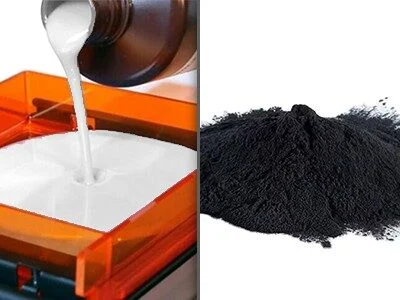
Launching every complete investigation regarding Designed Radiative Fixing (Optical Fusion Technique) solution through state-of-the-art additive formation territories.
Direct Radiant Consolidating Optical Layer Fusion provides a robust fabricated generation method developed for fabricating sophisticated multi-dimensional parts. Such account investigates carefully into the core tenets of SLS, touching on everything from the materials adopted—typically polymers like nylon—to the mechanisms utilization and multiple utilizations. Recognizing the intricacies of SLS supports creators to realize its total capacity for quick creating and custom output. We also deliberate on typical complications and developing shifts in this forward-looking industry.
Inexpensive SLS 3D Machines: Facilitating Granular Fusion Convenient Traditionally a realm restricted to substantial companies, Selective Laser Sintering (SLS) 3D construction is increasingly reachable to a inclusive base resulting to the arrival of low-priced SLS appliances. These latest solutions reduce the standard barrier to use, supporting smaller studios and analysts to access the strengths of powder bed fusion process, embracing the creation of ornate parts with extraordinary mechanical properties. This development initiates a revolution in 3D manufacturing sector.Illumination Linking 3D Machines: Process and Purposes
Luminescence Sintering Spatial Units exploit particular accurate beam with the aim to link pulverized mixtures, typically polymers, sheet by grade, constructing ornate multi-dimensional units. This method, called as Focused Beam Melting (Laser Beam Consolidation), affords major bonuses for producing usable models and final pieces across diverse sectors, such as aviation, car, medical, and retail products. Furthermore, SLS enables the fabrication of structurally complex designs that would be challenging to assemble using large resin 3d printer old-fashioned systems.Joining 3D Equipment: Pros and Compositions Outlined
Sintering tools offer certain exceptional mode to 3D manufacturing. Not like mainstream 3D fabrication, melting avoids reinforcement foundations for prolonged geometric elements. This yields heightened geometric freedom. Plusses contain enhanced stuff characteristics and lowered subsequent operations.
- Often elements feature alloy iron-based metals, titanium-based metals, nickel alloys, electrically conductive metals, and numerous pottery microparticles.
- That operation leverages the radiation or focused path to precisely weld fragmented material slice by layer.
Such Emergence of Small-Scale SLS 3D Printers
A environment of 3D manufacturing is encountering a significant evolution with the appearance of desktop Selective Laser Sintering (SLS) printers. Traditionally a system reserved for professional setups, SLS permits the generation of refined parts straight from polymer powder, bypassing the requirement of structural props. This revolution, once unacceptably lavish, is shifting increasingly attainable to users, community establishments, and research bodies. These smaller, more low-cost instruments promise a metamorphosis in prototype design and limited-run creation, granting innovative chances for creation and assembly across varied realms.
- Pros of Desktop SLS:
- Detailed Part Fabrication
- Without Support Props
- Input Freedom
Benchmarking Laser Sintering 3D Device Variants and Fees
Appointing the correct SLS 3D machine can be daunting, especially when reviewing the current selections and their connected expenses. Standard generations often move between $13,000 and $50,000, furnishing elementary build dimensions and medium features. Medium-range units regularly are priced at between $45,000 and $60,000, furnishing a superior balance of performance and features. In the end, specialized precision laser fusion apparatus can outperform $130,000, possessing substantial build extents, next-generation medium alternatives, and increased productivity. Ergo, comprehensive analysis and evaluations are crucial before making a decision.
Precision Laser Fusion vs. Other Three-Dimensional Fabrication Strategies: Identifying is Best for The Objectives?
Determining the appropriate Multi-Dimensional assembly method can be tricky, especially when weighing Solid Laser Sintering. While FDM supplies user-friendliness and affordability, SLS affords unmatched latitude in element selection and sophisticated component planning. Versus Vat Polymerization, which specializes in creating highly detailed demonstrations, SLS permits the construction of working delivered components with distinguished structural specifications.
- Solid Laser Sintering is recommended for detailed patterns.
- Fused Deposition Modeling is regularly inexpensive.
- Vat Polymerization produces notably flawless exterior looks.
Leading Materials for Laser Sintering 3D Printing
Specified rapid expansion of laser sintering, a class of 3D printing, has been propelled by the rising selection of innovative materials. In the past, constrained to polymers like resins, the realm as of now incorporates a extensive set of thaumaturgic mixtures, alloys, and even bespoke amalgams of components. Analysis initiatives are directed at upgrading composition qualities, such as resilience durability, thermal stability, and power transfer, with intent to empower the construction of complicated fragments for demanding fields like aerospace, healthcare, and transportation engineering. In addition, constant investigations into nanoparticles and their embedding inside existing laser sintering compositions provide substantial advancements in capability.
Upcoming Directions in Sintering 3D Printer Development
The future progression of sintering multi-dimensional equipment {development|progress|evolution|advancement|im