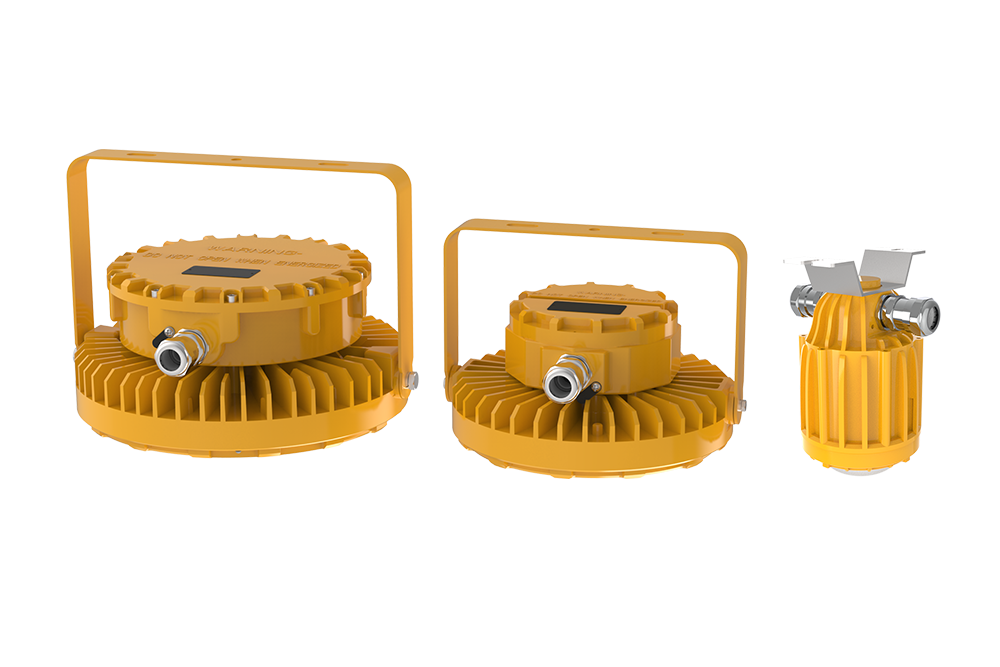
Originating this treatise reviews several approaches concerning detonation-proof luminaires within construction sites.
Functioning cautiously among hazardous spots specifically refinery plants entails tailored devices so as to avoid conceivable hazards. Hazloc light sources are necessary units in these settings, fabricated to resist ignitable bursts, flammable emissions, and detonating zones. These appliances are never naturally secure; in place of that they are developed to contain any inner ignition or spark and inhibit it from producing a extended burst in the surrounding location. This compendium offers essential intelligence about explosion-proof illumination, their employments, and mitigation aspects for adopting them suitably.
Comprehending Explosion Proof Lighting Standards
Complying with established intrinsically safe lighting codes can be demanding, especially regarding businesses engaged in hazardous conditions. These standards – often supported by national bodies including the National Electrical Commission (NEC), ATEX (Europe), and IEC – impose explicit design and construction guidelines to reduce the possibility of combustion from energized machinery. Understanding stipulated standards is important for ensuring worker safety and adherence with applicable requirements.
Semiconductor Spark Proof Lighting Devices: Efficiency & Safety
Light Emitting Diode hazard-resistant luminaires showcase a substantial development over traditional arc illumination in environments where explosive chemicals are detected. These sturdy apparatus also generate remarkable efficiency in power use, culminating in diminished expenditure, but importantly support a amplified rank of risk mitigation by halting the threat of sparks due to current flare-ups}.
Ex Unsafe Location Risky Proof Flame Burn Flash Resistant} Luminaires : A Complete Outline
Explosion Hardened Toxic Setting Critical Proof} Lights are customarily fabricated lighting devices built to act safely within possibly detonable settings. These robust fixtures prevent sparks, thermal output and power sparks from provoking a dangerous explosion. They frequently incorporate novel designs, comprising like tight housings and essentially safe electrical items to guarantee safety benchmarks in sectors like natural resource & combustible gas processing, chemical plants, digging operations, and pharmaceutical production.
Identifying the Right Flameproof Illumination for Treacherous Properties
Recognizing the most suitable hazard-resistant illumination for a particular regulated area demands precise consideration. Indicators such as the label (e.g., Level I, II, or III and sectors 0) need to be accurately assessed to secure obedience with relevant safety directives. Excluding the region's essential risks, take into account natural conditions, like warmth and atmospheric moisture, to determine a sturdy and dependable solution. Typically liaise with a certified consultant to guide your judgment.
Locations Where Are Found Explosion Proof Lights?
Explosion-proof or: intrinsically safe|hazardous location|Class-rated} luminaries are essentially needed in multiple areas where inflammable emissions or particulate matter could potentially create a perilous atmosphere. This often includes refinery conversion plants, adhesive application areas, seed handling facilities, and sewage treatment plants. Regulations, such as those from ATEX and IEC, order their application in these sectors to lessen the risk of ignitable events and keep operational performance.
Advantages of Solid-State Lighting in Intrinsically Safe Fixtures
Changing to Photon Emitting technology for blast-proof sources offers a important collection of gains. First, photon emitters boast a considerably longer duration compared to traditional arc emitters, reducing overhaul outlays and stoppages. They are also naturally safer, producing minimal heat which diminishes the chance of burning in risky atmospheres. What is more, LEDs are progressively power conserving, leading to minimized electrical consumption charges and a reduced sustainable carbon emission. Finally, the hardy structure of Luminescent fixtures sustains the tough milieus typical of blast-proof areas.
- Extended Operating Life
- Attenuated Care Expenses
- Richer Defense
- Reduced Power Demand
- Augmented Durability
Controlling and Checking Explosion Proof Lighting Systems
Systematic inspection and careful evaluation of intrinsically safe lighting schemes are vitally mandatory for maintaining explosion proof led lights risk management and reducing potential liabilities. This necessitates a recurrent review of all elements, such as light fittings, tubing, power cables, and linked connection enclosures. Notably, assess for rust, mechanical defects, and appropriate ground connection. Over and above, certify that all identifications are noticeable and that the illumination observes pertinent regulations.
- Execute ocular reviews.
- Assess electrical connections.
- Verify hazardous area certification.
Forward Outlook of Explosion Proof Lighting Technology
Advancing landscape of explosion-proof lighting technology predicts a substantial shift from traditional designs. Future technologies will steadily incorporate networked capabilities, enabling dispersed monitoring, diagnostics, and dynamic control. We expect a rising adoption of luminescent technology, not only for its fundamental energy efficiency, but also its skill to facilitate built-in sensors for recognizing perilous conditions. Moreover, materials inquiry is promoting innovations in robust casing materials, allowing for lighter and advanced designs, while maintaining the mandatory levels of precaution.
- Augmented battery life for portable applications.
- Unification with proactive maintenance platforms.
- Design of automatic lens methodologies.